
Guide
Why a Garage Door Goes Off Track
Fremont's 1960s-70s tract houses in Niles, Mission San Jose, and Warm Springs share the same door hardware issues after 50-plus years. Here's what actually causes a track jump.
Local detail
When Waiting Is Fine
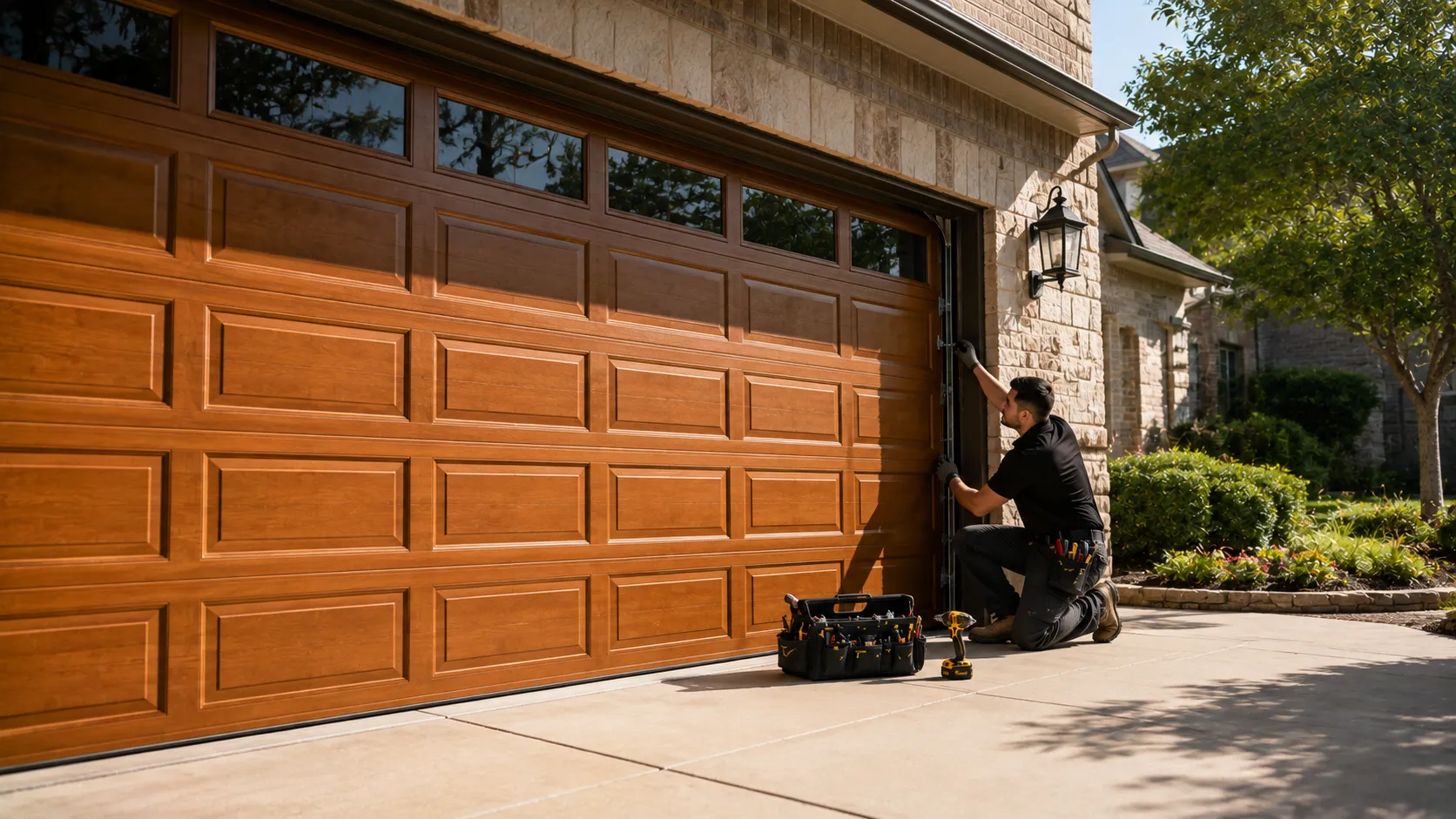
Not every off-track door is an emergency. If the door stopped partway and the opener just stalled, or one roller popped a few inches out of the track but the door still sits flat on the floor, you can usually wait a day or two and call during regular hours. A door that's hanging crooked, with a cable slack on one side, is different - that's a spring or cable problem, not a track problem, and it can drop.
In Fremont's mild temperate climate, you're not dealing with the freeze-thaw cycle that snaps hardware overnight the way it does in colder regions, so a track that's held for years usually gives you warning signs before it fails outright: a scrape, a shudder, a spot where the door catches. If you're hearing that and the door still opens and closes, it's fine to check it yourself before you pick up the phone.
The area
What Is Going On
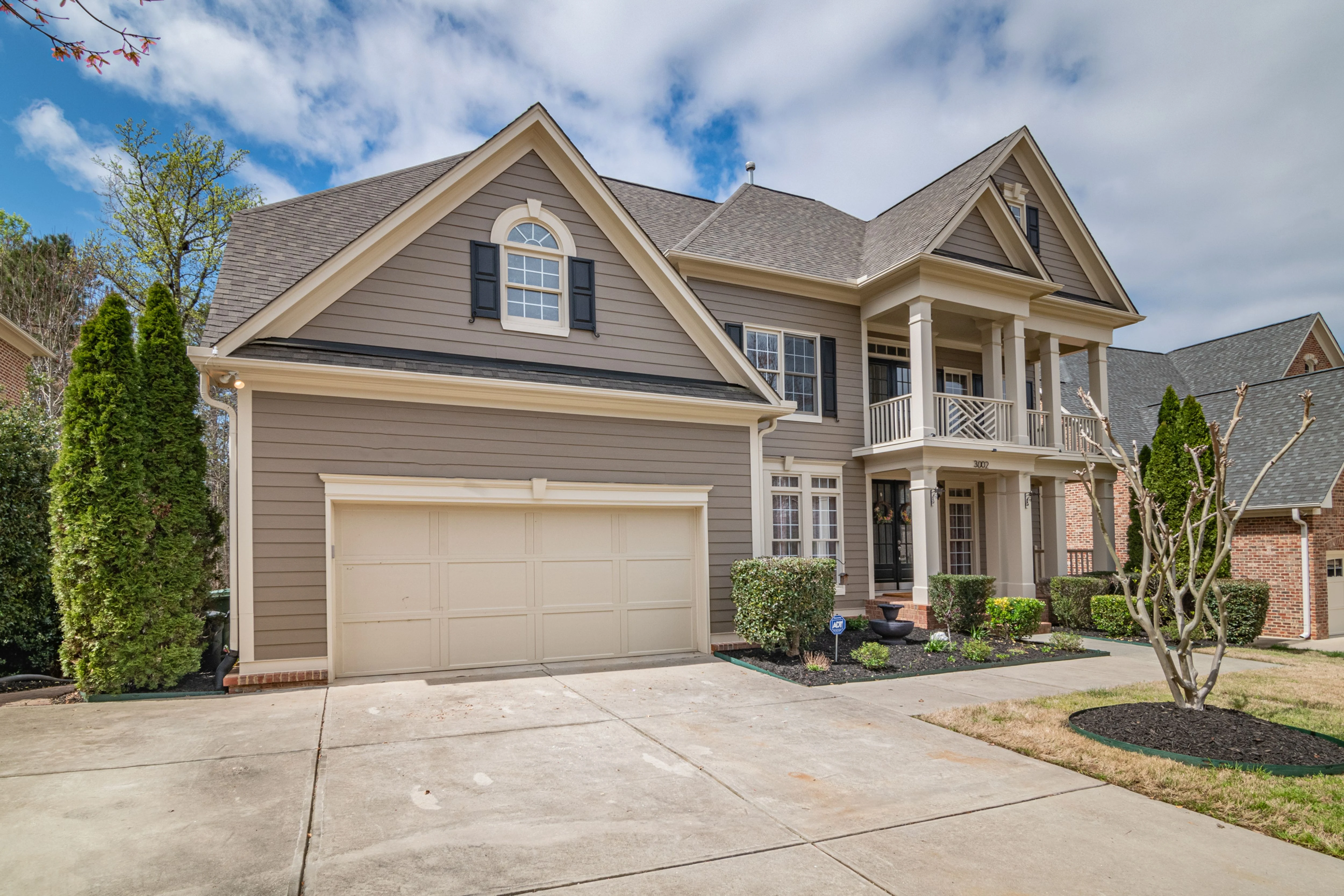
Most tracks come off for one of three reasons: the track brackets have worked loose from the framing, the rollers have worn down and started riding out of the channel, or the track itself got bent - usually from a car bumper or a door that was forced closed against an obstruction. In neighborhoods across Fremont built between 1955 and 2005, with a lot of stock dating to the 1960s and 70s median around 1966, the original track brackets are often still lag-screwed into the same jamb wood they went into decades ago. Wood that's flexed and dried out over fifty-plus years doesn't hold a screw as tight as it did on installation day. That's not a defect, it's just age catching up with the fasteners.
Add a worn roller - original steel or nylon rollers rarely make it past fifteen or twenty years of daily cycling - and the combination of a loose bracket plus a roller that's lost its shape is what actually pulls a door out of its channel. It's rarely one dramatic event. It's usually months of small movement that finally lets go.
What we find
What to Check
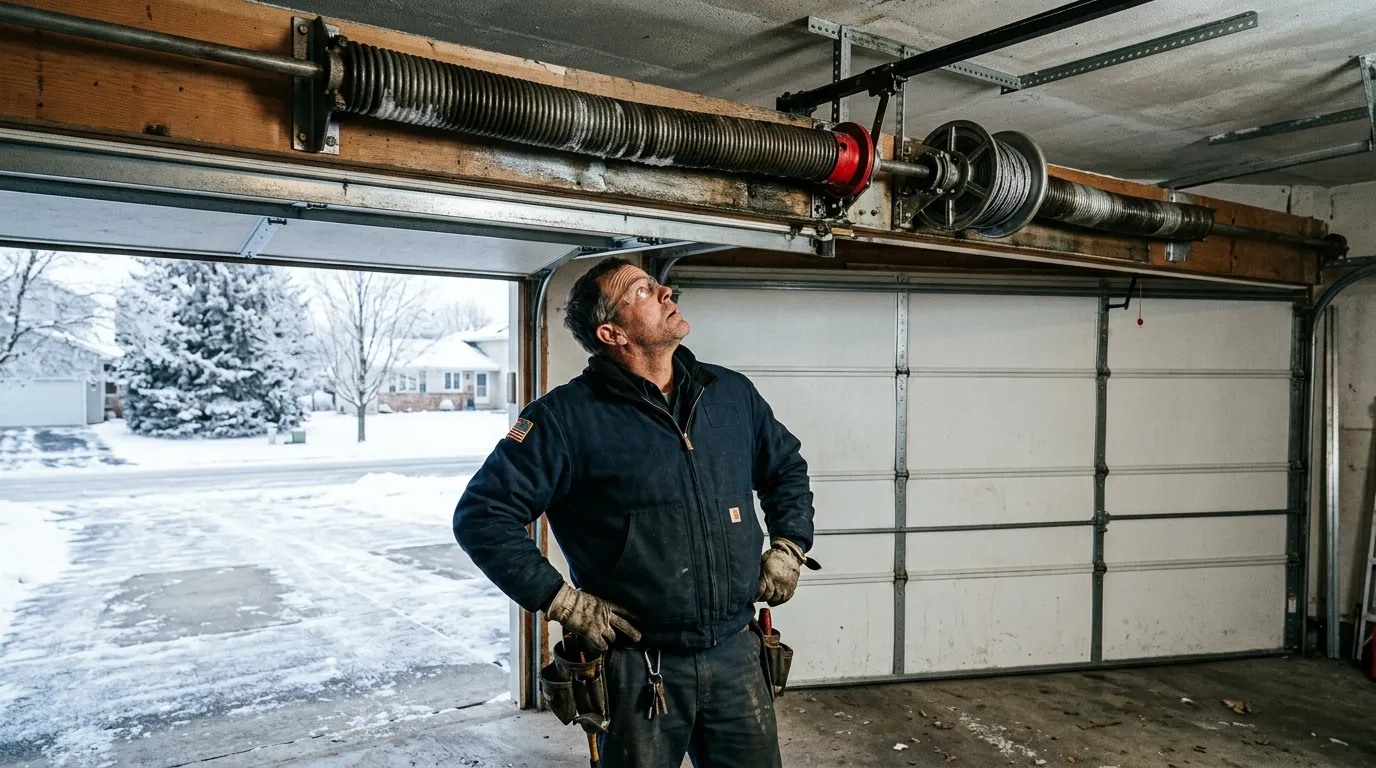
Start at the brackets: with the door closed, look at where the vertical track bolts into the frame on both sides. If you can wiggle the bracket by hand, that's your answer - the fix is re-anchoring it, not replacing the whole track. Next, look at the rollers themselves. Flat spots, visible cracks, or a roller that looks smaller than its neighbors means it's worn past useful life.
Run a hand along the track for dents or a spot where the two rails don't line up straight; a bent section usually shows as a shiny scuff mark where the roller's been grinding against it. Don't try to force a door back onto the track while it's under spring tension - that's how fingers get pinched. If the track is bent rather than just loose, it typically needs to come off and get straightened or swapped, which isn't a same-day parts item everywhere, so ask about lead time before you commit to a repair date.
How we work
How Local Conditions Play In
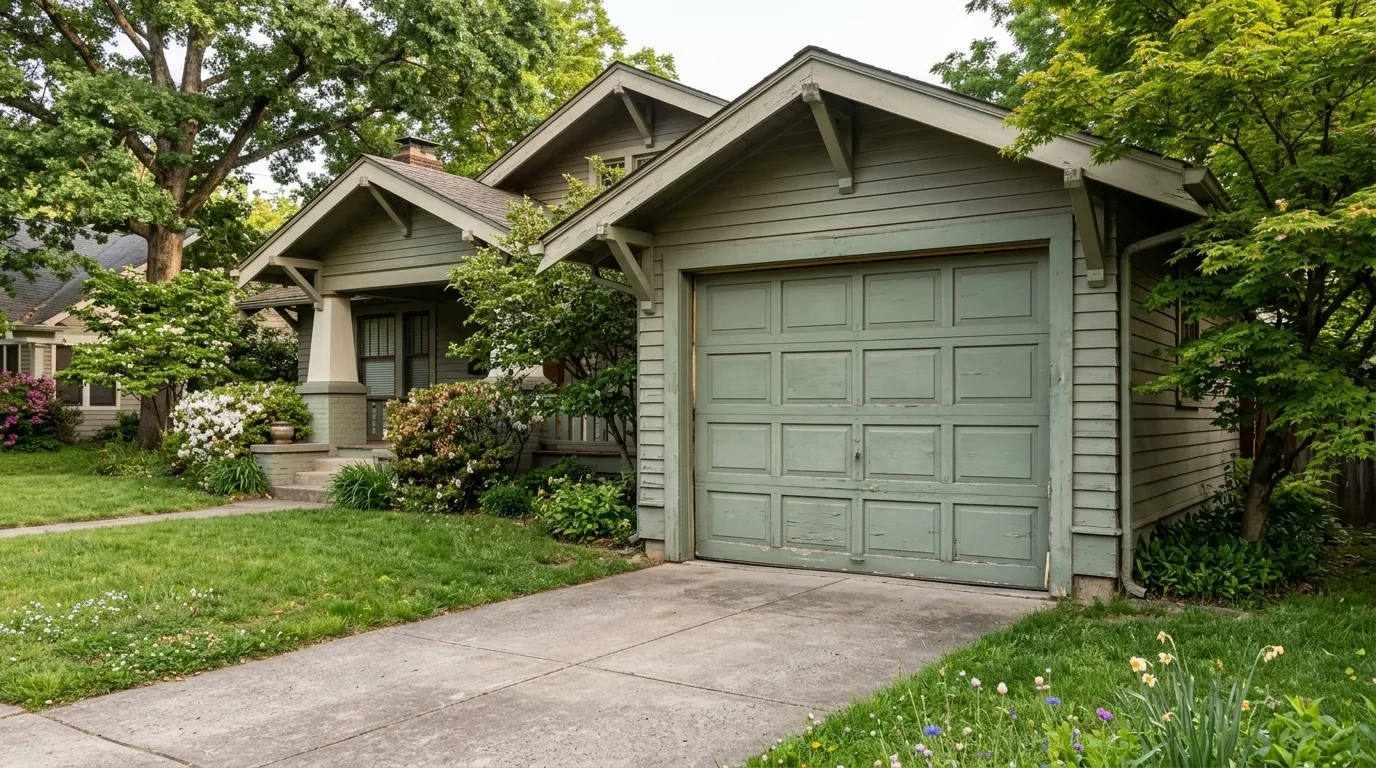
Fremont's climate doesn't put much stress on garage door hardware compared to places that see hard freezes or heavy humidity swings - the mild temperate band here means you're not fighting rust-through on tracks or brittle plastic rollers cracking in cold snaps. What you are fighting is age. Across the service area's roughly 129,215 owner-occupied houses, a large share were built in that same 1955-2005 window, with the heaviest concentration from the 1960s and 70s, spanning the 31 named areas that make up greater Fremont - from Niles and Mission San Jose down through Warm Springs and Cameron Hills.
A track and bracket set installed during that build wave has had fifty-plus years of daily door cycles to work the wood and metal loose, and that's the pattern we see regardless of which side of town the house sits on. It's not the weather pulling the door off track here - it's the decades.
Questions
Common questions
My garage door came off the track on one side only - is that worse?
It can be. A door off-track on one side often means an uneven roller wear pattern or a bracket that let go on that side only, and the door can rack sideways under spring tension. It's more likely to bind or drop than a door that's simply loose on both sides, so treat a one-sided derailment as the more urgent case.
Can I just push the door back onto the track myself?
If the door is closed and the opener is disconnected, you can sometimes reseat a roller by hand. But if there's any tension on the cables or the door is hanging at an angle, don't force it - that's exactly how a heavy door drops on a hand or foot. Get the spring tension checked first.
Is this an original-hardware problem for older Fremont houses specifically?
A lot of Fremont's housing stock dates to the 1960s and 70s, and original brackets and rollers from that era are well past their expected working life. It doesn't mean every older house has a problem, but if your track has never been serviced, age is the more likely cause than anything you did.
How long does a bent track take to fix?
Straightening a track is sometimes a same-visit fix; a track that's bent badly enough needs replacement, and that part isn't always in stock, so we can't promise a same-day turnaround on every job. Ask when you call what the current lead time looks like.
Ready when you are
Need a garage door sorted in Fremont?
Fremont Garage Door Pros repairs and installs garage doors, springs and openers in Fremont, CA and the surrounding area.