
Stanford, Fremont CA
Garage Door Service for Stanford Homes, From Fremont
Fremont Garage Door Pros services Stanford's 1980s-built homes, 13 miles from our shop, with spring, opener, and track repairs matched to that later housing stock.
Local detail
What That Means for Doors
Stanford's homes went up mostly around 1982, which puts this pocket well ahead of the median build year across the rest of the territory we cover from Fremont, where 1955 to 2005 stock centers closer to 1966. That fifteen-year gap matters more than it sounds like it should. Because these houses date to the early 1980s, you're more likely dealing with a factory torsion spring than the older extension-spring setups common on Fremont's mid-century stock, and the openers are more likely chain-drive units from a later generation of hardware, not the earliest screw-drive models that show up in older neighborhoods.
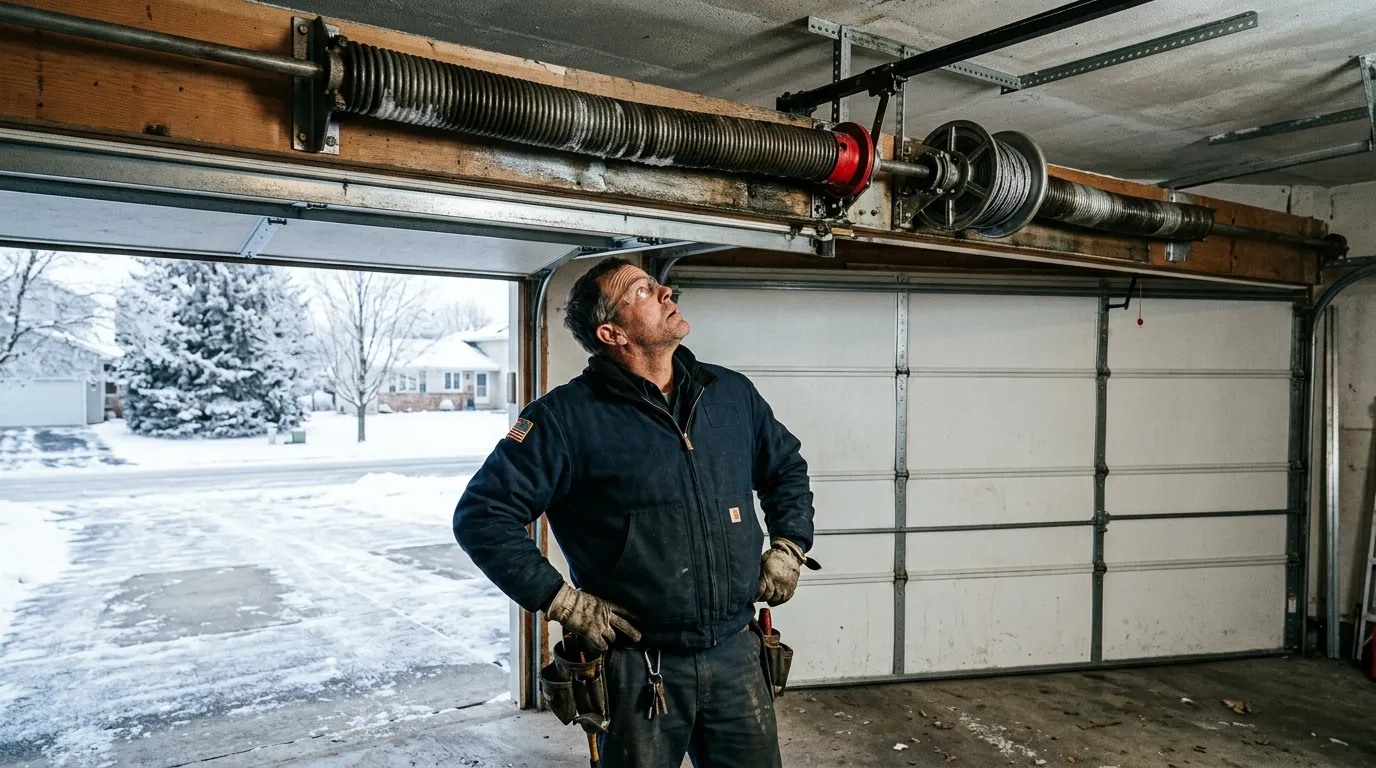
Track and roller wear looks different too - 1980s garage framing tends to run standard 7-foot headroom, so replacement doors and openers usually drop in without the bracket modifications older openings need. The mild temperate climate here means we're not chasing rust from road salt or warping from deep freeze-thaw cycles, which is one less variable on top of an already newer door population. None of this means these doors are trouble-free - a factory torsion spring installed in 1982 has had four decades to fatigue, and that's usually what brings the call in.
The area
When We Can Get There
We run out of Fremont, and Stanford sits about 13 miles from the shop. We don't keep a second location or a dedicated crew stationed out this way, so a Stanford call goes on the truck route same as any other stop on that side of the territory. That's worth saying plainly rather than promising something we can't back up - we're not going to tell you we're around the corner when we're not.
What we can tell you is that the drive is a known one; Stanford falls inside a cluster of places we already reach regularly, alongside nearby Palo Alto and Los Altos at similar distances. If you call, expect us to schedule the trip rather than claim a same-hour arrival, and if timing matters for your situation, say so up front so we can plan the route around it. A 13-mile run from Fremont is a normal part of the day for us, not a special trip, but it's also not a walk-up shop you can drop by unannounced.
What we find
What Was Built Here
This part of our coverage area is small by household count - about 3,791 households, compared to roughly 331,204 households across the full service territory - and it reads as a distinct pocket rather than a slice of a bigger, uniform suburb. Median household income here runs $70,651, well below the $193,633 median across the wider area, which is a real difference worth naming rather than glossing over with generic language about the neighborhood. The median year built of 1982 puts the bulk of the housing stock in a build era distinct from the 1955-2005 span, median 1966, that describes most of the roughly 129,215 owner-occupied houses we see across the 31 named areas we track.
What that adds up to: fewer of the original one-piece doors and side-mounted torsion units that show up in Fremont's older tracts, more standard steel sectional doors on modern extension or torsion hardware that's aged on a shorter clock. The parts situation is generally easier here for that reason - newer hardware means more common spring sizes and opener parts still in production.
How we work
What People Here Ring About
Given the 1982 median build year, the calls we get from this pocket tend to cluster around fatigue rather than obsolescence - a torsion spring that's finally given out after decades of daily cycles, a chain-drive opener whose logic board or gear set has worn down, rollers that have gone from nylon to metal-on-metal loud. We don't see as many calls here for doors that need full hardware conversion because the parts are extinct, which is more of an issue on the older side of our territory. One honest limit: we don't stock every gear kit or circuit board for every opener brand on the truck, so if your unit needs a specific part, that sometimes means a second trip once we've confirmed exactly what's failed.
We'd rather tell you that upfront than promise a one-visit fix we can't guarantee. If your door is sticking, reversing on its own, or making a bang partway through the cycle, those are the calls worth making before the spring or cable actually lets go.
Service areas
Other areas we cover near Stanford
Questions
Common questions
Do you have a location in Stanford?
No. We're based in Fremont, about 13 miles away, and we drive out for calls rather than staffing a second shop. Scheduling accounts for that drive, so we don't promise a same-hour arrival - just a real appointment we'll show up for.
Are Stanford garage doors different from the older ones in Fremont?
Generally, yes. The median build year here is 1982, well past the 1955-2005 span with a 1966 median seen across the wider territory. That means more standard steel sectional doors on torsion or extension hardware, and fewer of the original one-piece doors that show up in older tracts closer to Fremont.
What repairs do you see most in this area?
Mostly spring fatigue and opener wear tied to age rather than obsolete parts - a torsion spring giving out after decades of cycles, or a chain-drive opener's gears or board finally failing. Fewer calls here involve hunting down discontinued hardware than in older parts of the territory.
Ready when you are
Need a garage door sorted in Fremont?
Fremont Garage Door Pros repairs and installs garage doors, springs and openers in Fremont, CA and the surrounding area.