
Drive time variability dominates
The drive itself is the bigger variable than the weather. Once we're on site, a straight spring replacement on a standard torsion setup is a same-visit job.
Saratoga, Fremont
Saratoga homes built around 1967 still run original wood-jamb torsion hardware. We drive out from Fremont, 16 miles, for broken springs, off-track panels, and dead openers.
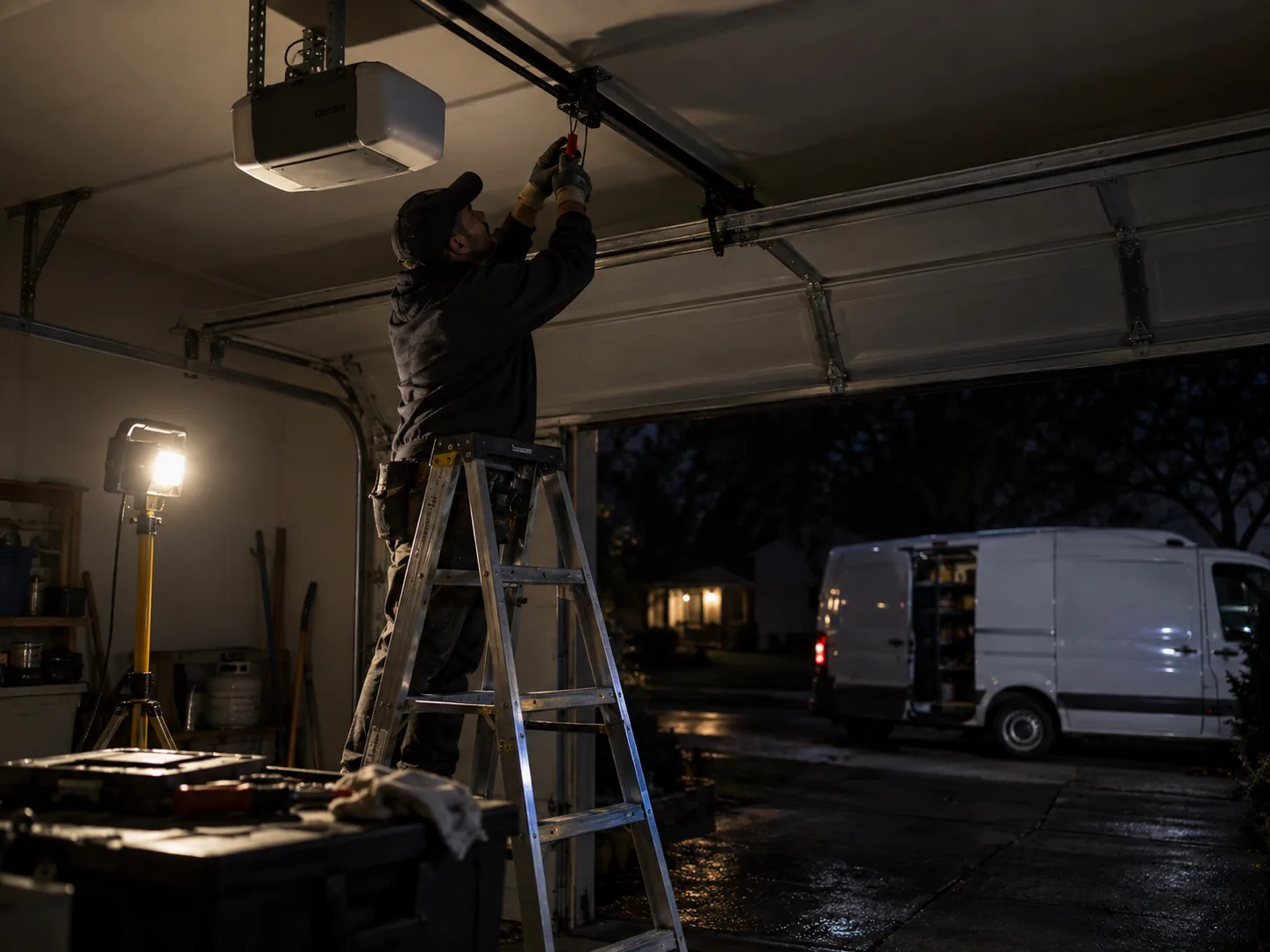
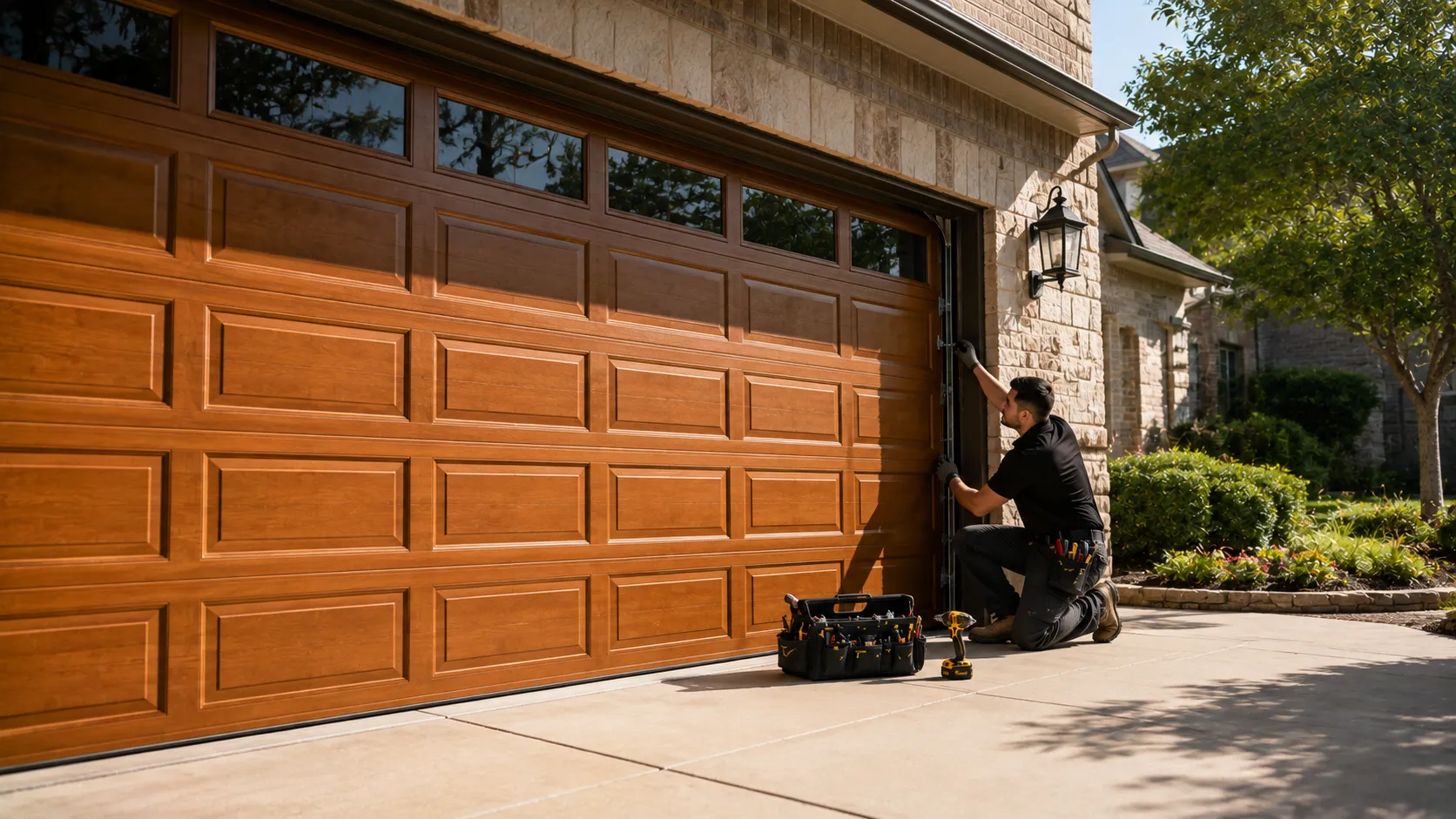
Our process
Most of Saratoga went up around 1967, and the garage doors that came with those houses are still, in a lot of cases, the same doors.
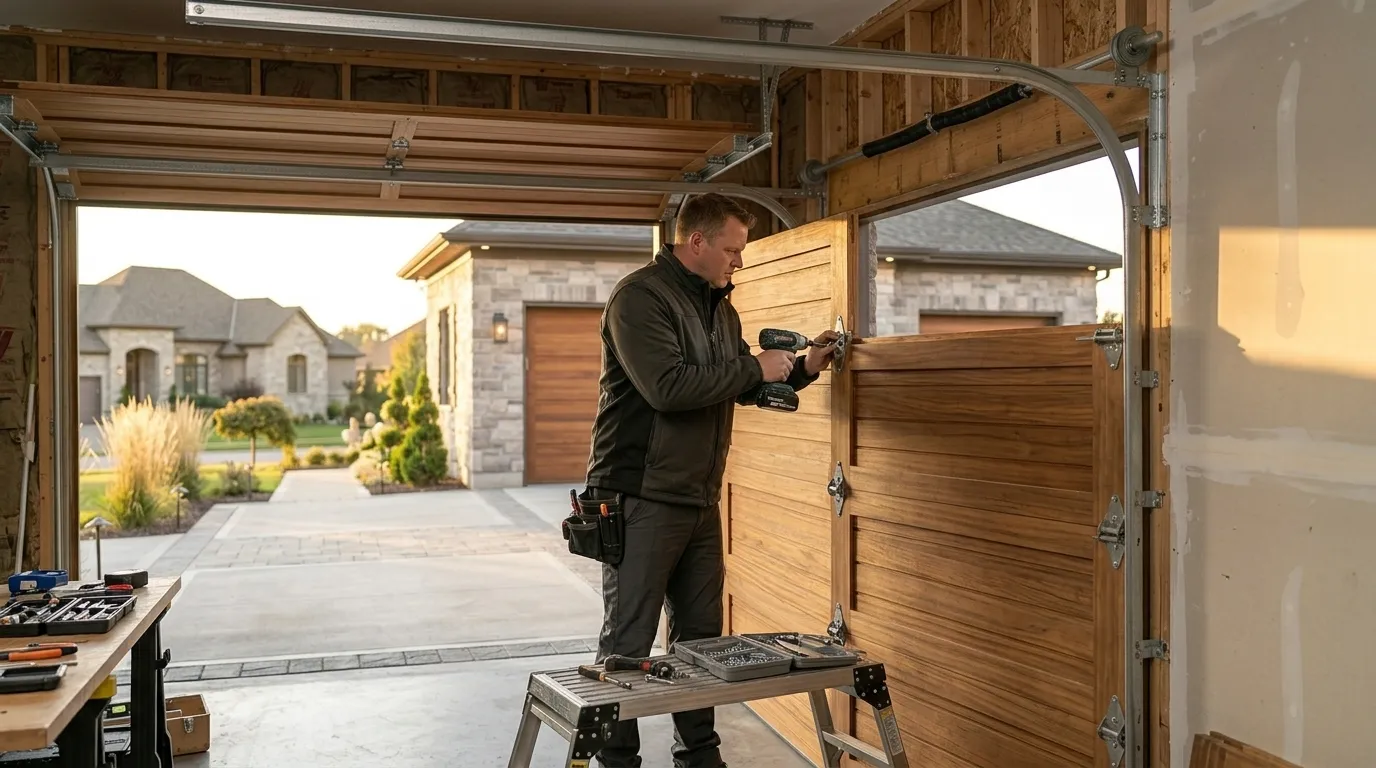
That means wood panel construction, single-layer without foam backing, hung on wood door jambs rather than the steel frames you'd find on anything built after the 1990s. The springs are torsion, mounted on a header board that's had forty-plus years to dry out and shift.
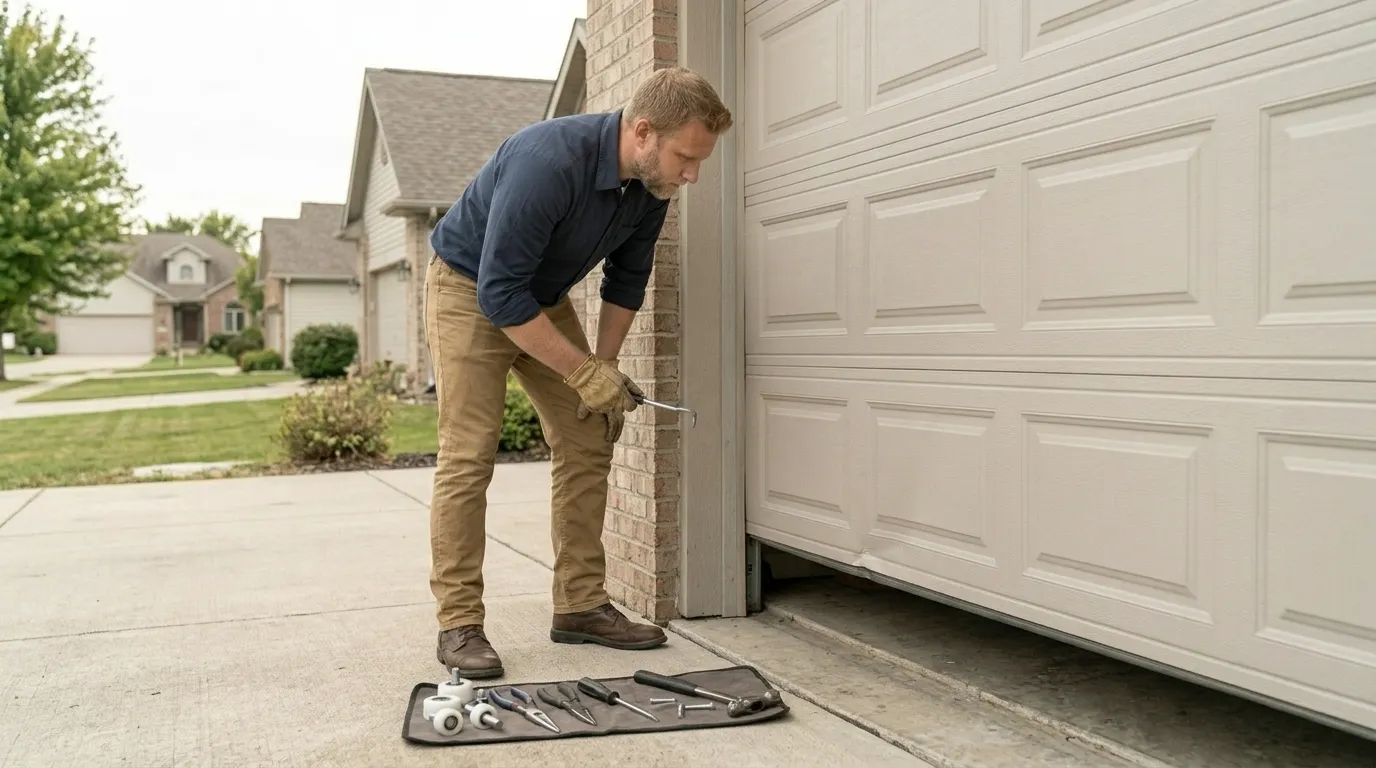
When we get a call, the first thing we're checking isn't the opener - it's whether the jamb itself is still square and whether the mounting hardware has enough solid wood left to hold a new spring under tension. Fixing the door in front of us takes a different set of moves than fixing a door that's ten or fifteen years old.
We diagnose on the wood first, then move to the spring, cable, or track problem that actually brought the door down. We travel out from Fremont for these calls, 16 miles each way, so we come loaded with the parts a house like this typically needs rather than guessing on site.
Pricing
We don't post a flat number here, because a wood-jamb torsion setup from the 1960s costs more to fix right than a modern steel-frame door, and the spread between a simple spring swap and a jamb rebuild is real. What we can tell you: Saratoga's median household income sits at $241,348, well above the wider service area's $193,633, and we see more owners choose full replacement over patching a fifty-plus-year-old door once they're quoted the repair. That's a decision we lay out plainly on site - what a repair buys you, and what it doesn't.
The honest limitation: if your jamb wood has gone soft or split, we're not going to torque a new spring against it and call it fixed. That's a bigger job, and we'll say so before we start, not after.
Job timing
Saratoga sits about 16 miles from our Fremont base, and the mild temperate climate here means we're rarely dealing with the kind of weather delay that pushes a job back a day - no ice, no monsoon season, nothing that keeps a truck off the road.
The drive itself is the bigger variable than the weather. Once we're on site, a straight spring replacement on a standard torsion setup is a same-visit job.
Where it stretches is the diagnostic step unique to houses this age: confirming the jamb can take new hardware before we commit to the repair. That's ten to twenty extra minutes of looking, not guessing, and it saves a callback.
Watch-outs
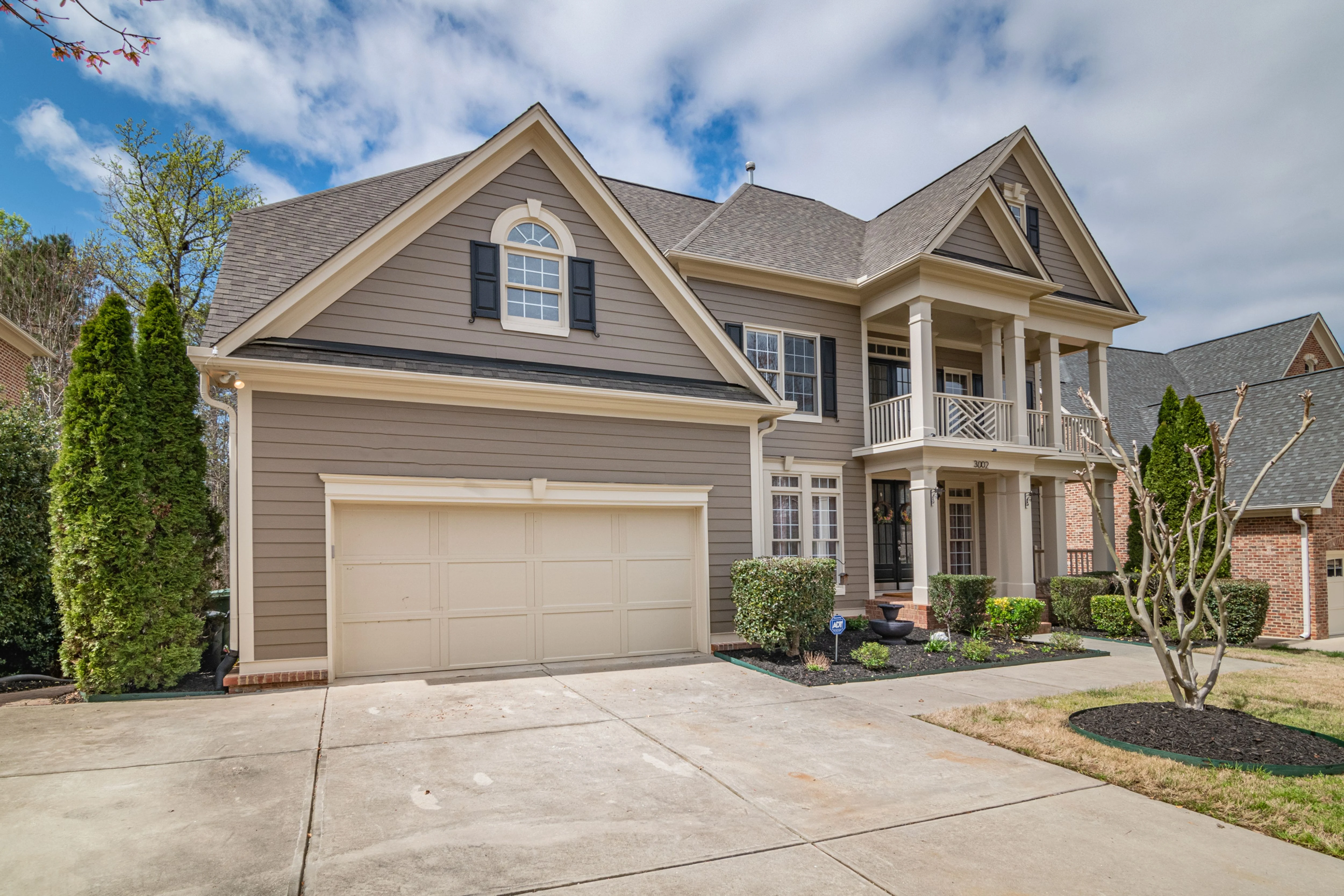
The complication with a 1967 door isn't usually the spring - it's everything the spring is attached to. Wood jambs that have shrunk, warped, or been painted over a dozen times don't take lag bolts the way they did new. Cables can be original-length and non-standard for the size door installed, especially if a prior owner swapped panels without swapping hardware to match.
Size is the other one. Doors from this era in the South Bay were built to whatever opening the builder framed, not to a catalog standard. A double door here might not be a stock 16-foot; it might be closer to 15'6" or run an odd height. That mismatch is why guessing a part off a truck without measuring on site leads to a second trip, which we try hard to avoid.
On the truck
Because Saratoga's housing stock clusters tightly around that 1967 build year, we stock torsion springs sized for the wood-jamb setups common to houses of that era, along with extension brackets that let us adapt modern hardware to an old jamb without replacing the whole frame.
We carry standard cable and roller stock too, since those wear out regardless of the house's age. What we don't always carry on the truck: an exact custom-length track for a non-standard opening.
If your door runs an odd size - and on a street of houses this old, it sometimes does - that part may need to be ordered, which we'll tell you at diagnosis, not after we've already opened the door up.
Warning signs
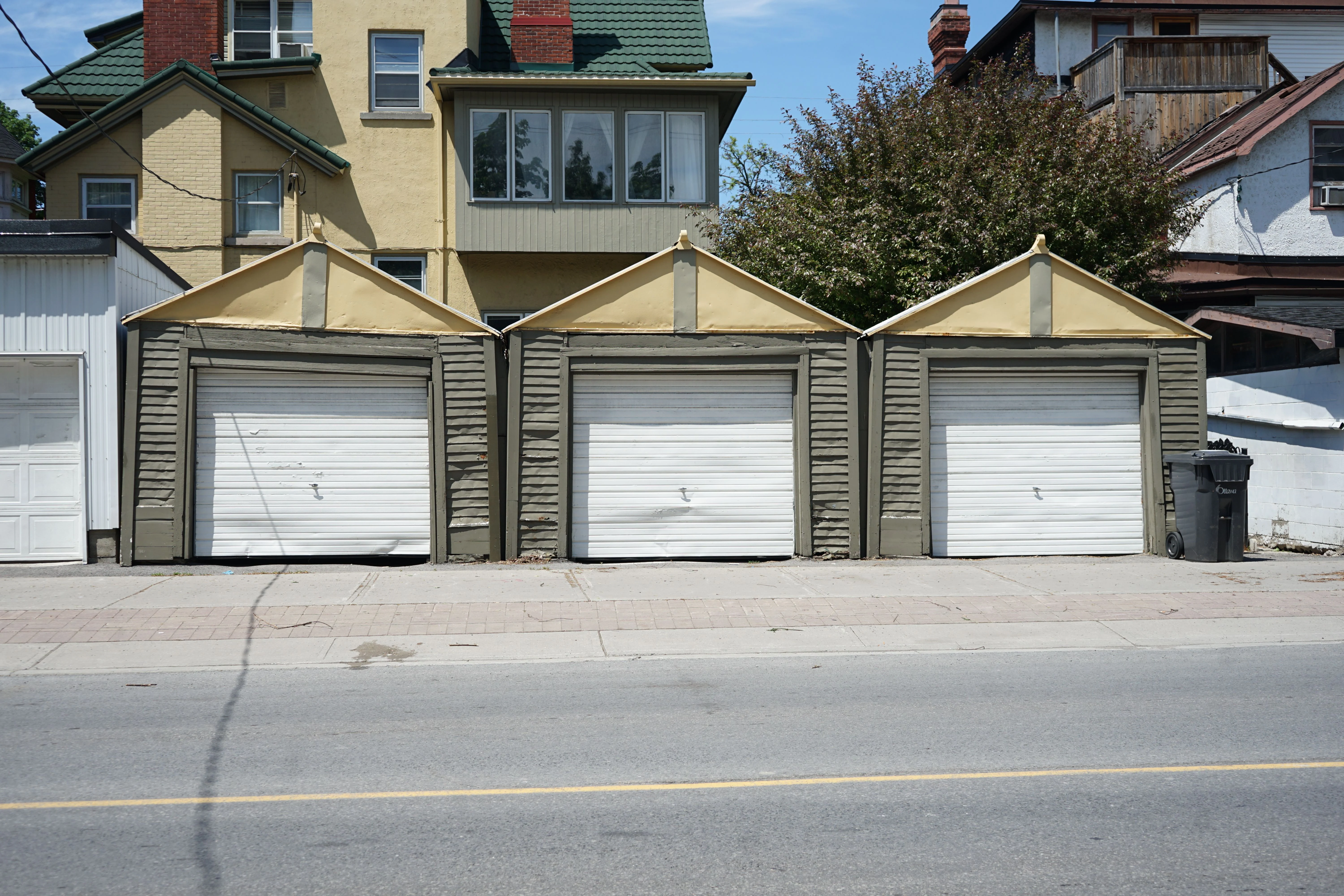
On a house this age, failure usually looks like one of two things. Either the door won't lift past a few inches and drops back down - a snapped or badly worn torsion spring - or it lifts unevenly, one side higher than the other, which points to a cable that's stretched or slipped off a drum that's been under load since the Johnson administration.
A slower symptom: the opener strains audibly on every cycle for weeks before it finally quits. That's usually the spring losing tension gradually, and the opener trying to make up the difference until it can't. If you're hearing that on a door built around the mid-1960s, it's worth a call before it fails at 6am on a work day.
Questions
No. We run out of Fremont, about 16 miles away, and cover Saratoga along with the rest of the surrounding area from there. There's no local branch, just a truck stocked for this area's housing stock.
If your house dates to the 1960s like most of Saratoga, the spring is mounted on a wood jamb, not a steel frame, and that jamb often needs extra hardware or reinforcement to hold a new spring safely. Newer steel-frame doors skip that step entirely.
We don't stock exact matches for original 1960s wood panel doors - those were often builder-grade and not a standard catalog item. For a damaged panel on a door this old, replacement is usually more practical than trying to match the original.
Unlikely. The climate here stays mild temperate, so weather isn't usually the thing that pushes a job back. The bigger factor is whether your jamb or hardware needs anything beyond a straight parts swap.
Explore more
Ready when you are
Fremont Garage Door Pros repairs and installs garage doors, springs and openers in Fremont, CA and the surrounding area.