Newark, Fremont

Garage Door Repair for Newark's Mid-1970s Housing Stock

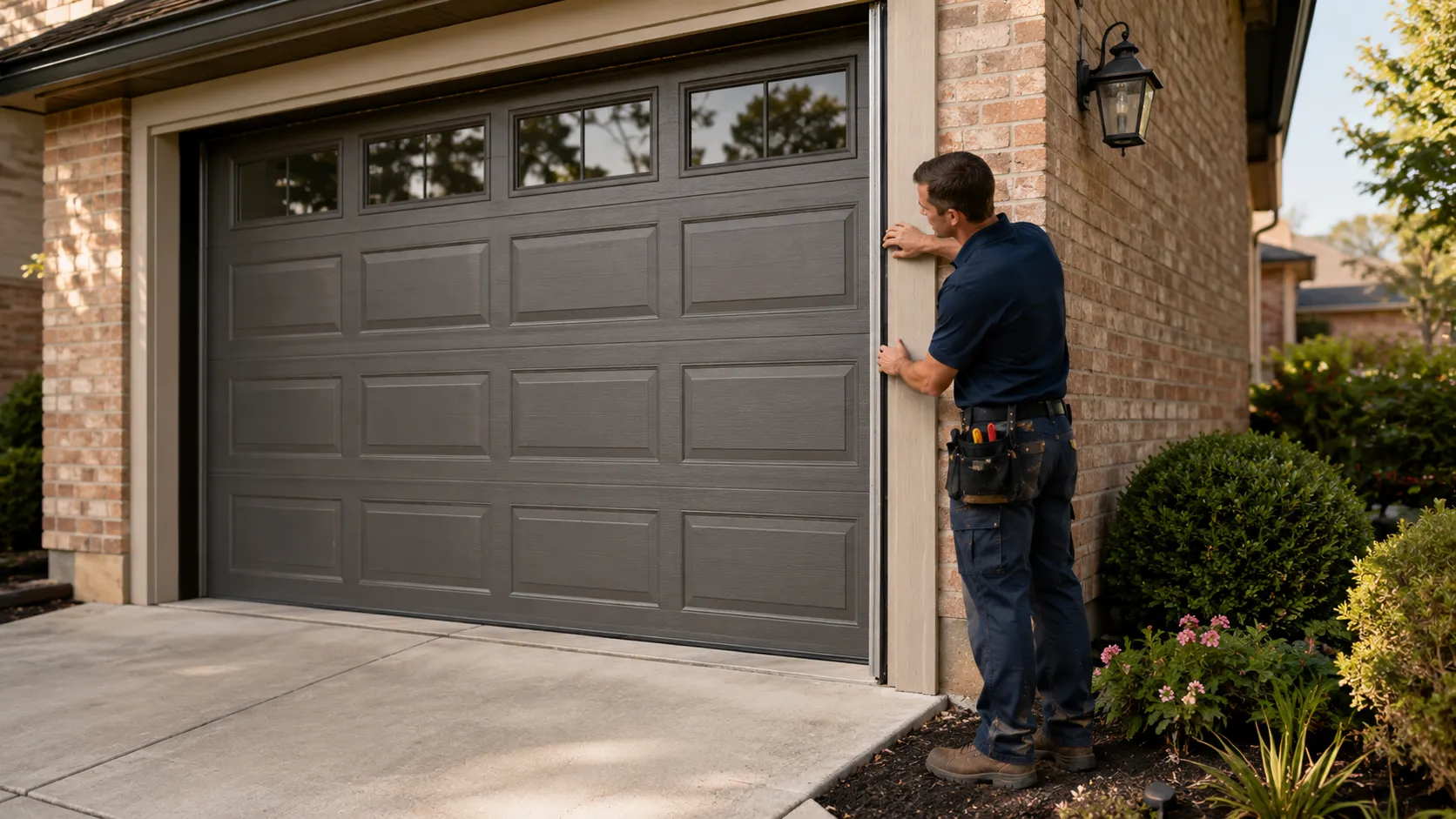
Newark homes mostly date to the mid-1970s, which means torsion hardware, not the extension springs common on older service-area stock. We travel the 5 miles from Fremont to fix it.

Garage Door Repair for Newark's Mid-1970s Housing Stock in Fremont
Serving Fremont, CABackground-checked techsHonest, upfront pricingFast local response

Job timing

Time on the Job

Most houses in Newark went up around 1975. That's later than the median across our whole service area, which sits closer to 1966, and the gap matters for what's actually bolted to the header above your door.

Extension spring era houses

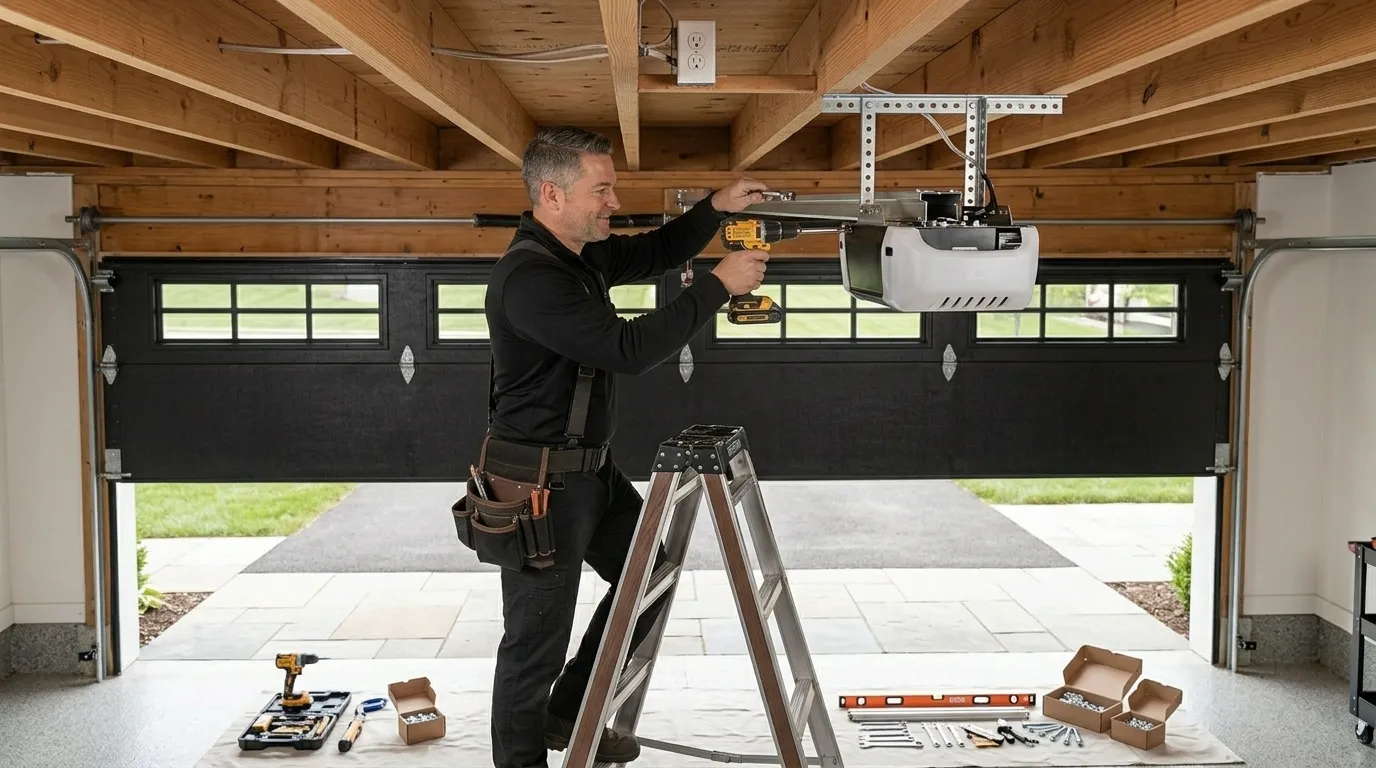
A house built in the early '60s is more likely to have an old extension spring setup with the spring stretched along a horizontal track. A house built in Newark's mid-'70s window is more likely to have come with torsion spring hardware from the start - a spring or pair of springs wound on a steel shaft above the door, with cables running down each side to the bottom bracket.

Torsion system safety profile

Torsion setups are safer when they're working right and worse when they're not, because the spring is under tension the whole time the door is down, not just when it's open.

Steel door opener generations

We see fewer of the old drum-and-rope wood doors out here than we do in the older pockets of the area, and more steel sectional doors on their second or third opener. That's the starting point for almost every call we take in Newark: not what's broken, but what generation of hardware is holding the door up in the first place.

Our process

How We Fix It

We come from Fremont, five miles away, so the drive isn't the delay - parts matching the hardware is. On a torsion setup, a broken spring means we measure the wire size, coil diameter, and wind direction before we touch anything, because the wrong spring on a 1970s-era torsion shaft will either underpower the door or overload the opener trying to compensate.

  1. Piecemeal repair detection

    If the door is original to a mid-'70s build, we also check whether the drums, cable, and center bearing plate match the shaft or have already been swapped out piecemeal by a previous repair.

  2. Mismatched part failure risks

    Mismatched parts on an old torsion system are a common cause of a door that looks fixed for a few weeks and then fails again at a different point.

  3. Hand-power balance testing

    We test the balance with the opener disconnected before we hand the door back - a torsion door should hold at waist height under hand power alone. If it doesn't, something's still wrong, even if the immediate complaint is solved.

On the truck

Stocked Parts

For Newark's mid-'70s stock, the parts that move most often are torsion springs sized to older shaft diameters, nylon and steel rollers to replace the originals, and galvanized lift cable - the factory cable on a 45-plus-year-old door is usually well past its rated cycle count even if it hasn't snapped yet. We also carry standard-duty torsion drums and end bearings, since those wear out quietly and get blamed on the spring instead. What we don't stock on the truck is anything for wood doors on the old drum-and-rope extension setup - that hardware shows up more in the area's older pockets than in Newark itself, and when we do hit one we're sourcing parts for it, not pulling them off the shelf. If your door is one of the rarer older ones out this way, tell us that on the call so we can plan the visit instead of discovering it on site.

Stocked Parts

Warning signs

How It Shows Up

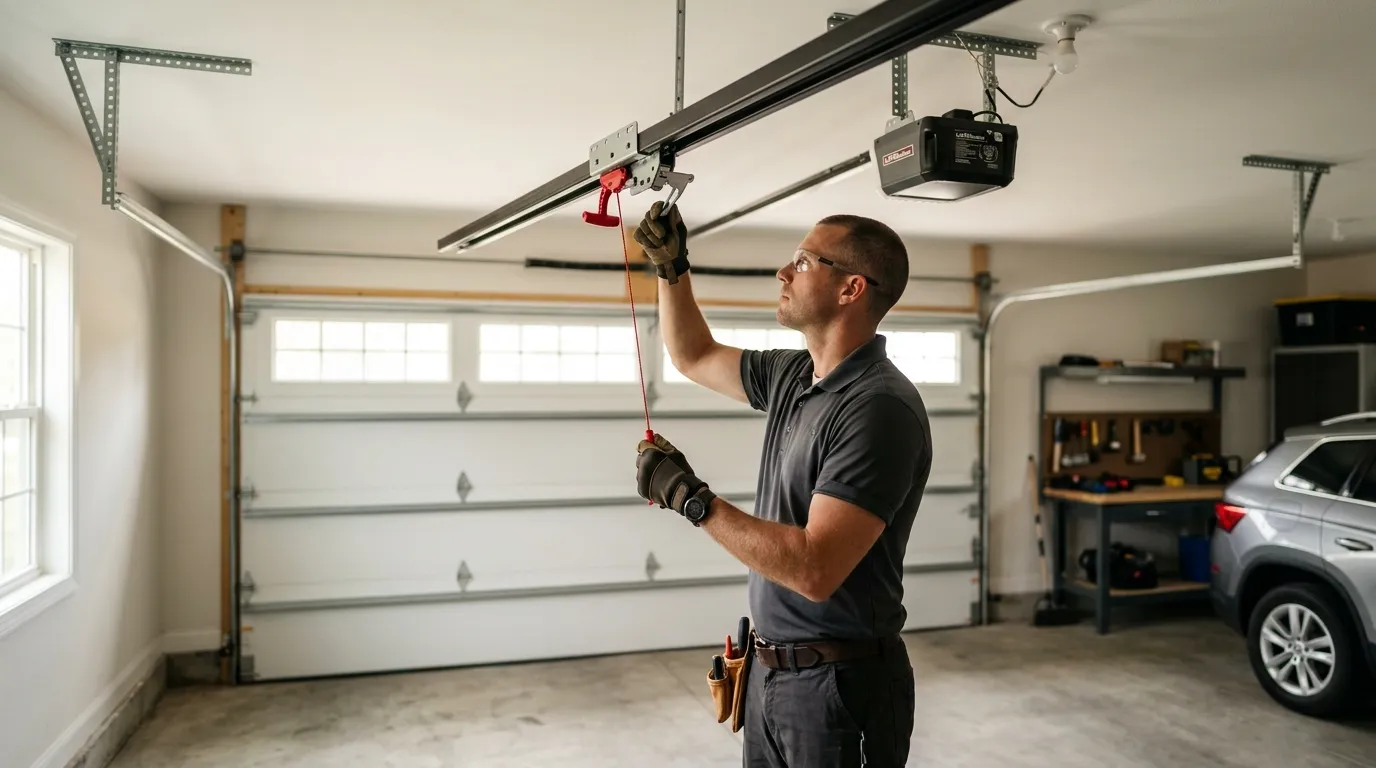
On a torsion door, trouble usually looks like a bang from the garage - the spring letting go - followed by a door that's suddenly heavy enough that the opener strains and clicks off partway up.

Crooked door descent

Sometimes it's quieter: a door that starts drifting off level, coming down crooked with one side lower than the other, which points to one spring going while the other is still holding.

Cable fraying warnings

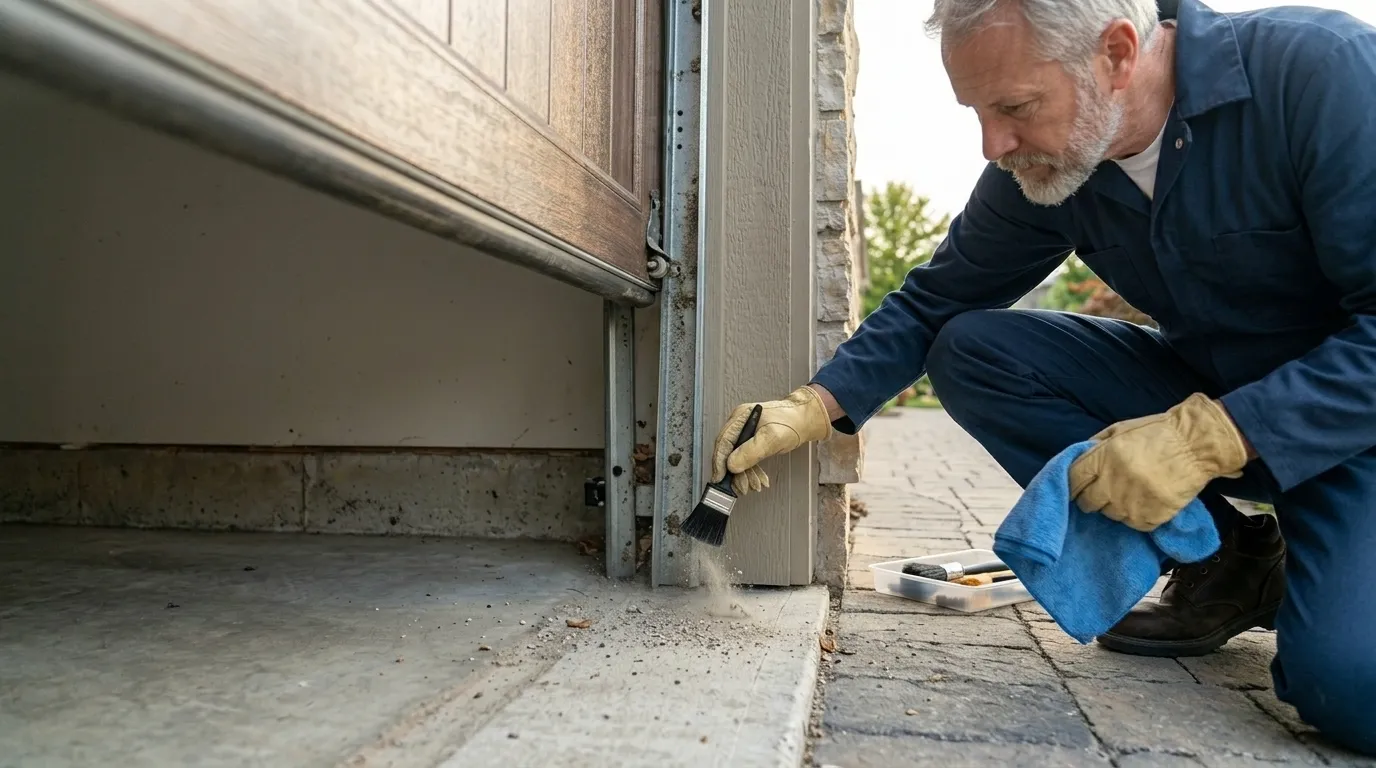
Cable fraying near the bottom bracket shows up as a visible kink or a few strands sticking out, usually months before it actually breaks. Rollers on a 1970s-era door that's never been serviced tend to announce themselves with a grinding or popping sound on the way up, especially in the last two feet of travel.

Roller grinding sounds

None of these are emergencies in the sense of danger to the house, but a door stuck open on a broken spring is a door nobody should try to force closed by hand - the spring that let go is still attached to the other side.

Why It Happens Here

Local causes

Why It Happens Here

Newark sits in the same mild temperate band as the rest of the area we cover, so we're not dealing with hard freezes cracking seals or summer humidity swelling wood panels the way some climates do. What wears out torsion hardware here is straightforward use - cycle count, age, and how much dust and grit builds up on the track and rollers over a few decades. A door opened twice a day for 45 years has gone through roughly the same number of cycles whether the house sits in a mild climate or a harsh one; the spring doesn't know the weather, it knows the count. At $164,909, Newark's median household income runs below the wider service area's $193,633, and that's not a small detail - it tends to shape whether a homeowner calls for a spring swap now or waits until the door won't move at all, which almost always turns a repair into a bigger job.

The Complications

Watch-outs

The Complications

The honest limitation: if your torsion shaft or drums are a discontinued size from the original 1970s installation and nobody's touched them since, matching parts can take longer than a same-day fix allows, and we'll tell you that on site rather than force a mismatch that fails again in a month. We also won't recommend a spring-only repair on a door where the track is bent or the panels are rusted through at the bottom - at that point the spring is the cheap part of a problem that's really about the door itself, and replacing it under those conditions is throwing good money at a door that needs replacing anyway. We'd rather say that up front than have you call us back in six weeks for the same noise.

Questions

Common questions

Do you have a location in Newark?

No - we run out of Fremont, about five miles away, and cover Newark from there. There's no separate branch or depot here, just the drive, which is short enough that it doesn't change how we schedule the job.

Is my torsion spring the same as a house built in the 1960s?

Not necessarily. Newark's housing mostly dates to around 1975, later than a lot of the surrounding area, so torsion hardware is more common here than the older extension-spring setups. We still measure your specific shaft and wire size before ordering - build year is a starting point, not a match.

Why does my door feel heavier on one side?

That usually means one torsion spring has weakened or broken while the other is still holding tension. It's not something to force by hand - the working spring is still under load. Get it looked at before the door drops unevenly and stresses the track.

Ready when you are

Need a garage door sorted in Fremont?

Fremont Garage Door Pros repairs and installs garage doors, springs and openers in Fremont, CA and the surrounding area.

CallGet a quote